
Views: 0 Author: Site Editor Publish Time: 2025-09-14 Origin: Site


Rural communities around the world often face transportation challenges that are very different from those in cities. Long distances between villages, limited public transport, and poor road conditions make mobility difficult for residents. For small farmers, shop owners, healthcare providers, and families, finding affordable and reliable transportation is essential for daily life and economic development. Traditional vehicles such as motorcycles, vans, or trucks are commonly used, but they come with high fuel costs, frequent maintenance needs, and limited accessibility for those with lower incomes.
In recent years, electric tricycles—also called e-trikes—have gained attention as a solution to these rural challenges. With their affordable purchase price, low operating costs, and ability to carry both people and goods, they are becoming an important tool for improving accessibility and efficiency in rural areas. More than just vehicles, they are enabling communities to connect, expand opportunities, and reduce dependence on costly fuel-based transport systems.
This article explores how electric tricycles are transforming rural mobility, highlighting their role in expanding accessibility and improving efficiency, while also addressing challenges and future possibilities.
For many families living in rural areas, owning a car is simply too expensive. Fuel prices, regular servicing, and repairs put a heavy burden on household budgets. Motorcycles are more affordable but are not always suitable for families, especially when transporting children, elderly members, or heavy loads.
Electric tricycles provide a practical alternative. Their purchase cost is significantly lower than that of cars, and they are safer and more stable than motorcycles because of their three-wheel design. Families can use them for school runs, grocery shopping, or traveling to nearby towns. The electric motor eliminates the need for fuel, and charging costs are minimal compared to gasoline expenses.
For households with limited incomes, this means reliable transportation is finally within reach, helping them save money while improving their quality of life.
Agriculture is the backbone of many rural communities. Farmers need to transport crops, tools, and livestock over long distances, often on rough rural roads. Traditional transport solutions like trucks are expensive to operate and may not be necessary for small-scale farmers who handle moderate loads.
Electric tricycles equipped with cargo space are proving to be a perfect fit. They can carry vegetables, grains, or farm tools from fields to local markets without requiring costly fuel. Some models are even designed with larger storage areas or modified cargo beds, making them highly versatile for different farming needs.
By lowering transport costs, electric tricycles allow farmers to keep more of their income and reinvest in their farms. This creates a cycle of growth where affordable mobility directly supports agricultural productivity and rural economic development.
One of the biggest challenges in rural areas is access to healthcare and education. Clinics, hospitals, and schools are often located far from villages, making it difficult for families without reliable transport to reach these essential services.
Electric tricycles can help bridge this gap. Families can use them to take children to school safely, even on bumpy rural roads. Community members can use them to transport patients or the elderly to nearby clinics. In some areas, healthcare workers themselves are using electric tricycles to reach patients in remote villages, bringing medicines and essential supplies directly to people’s homes.
The affordability and ease of operation of electric tricycles mean that even small communities can organize shared transport systems, improving access to services that were previously too far or too costly to reach.
Beyond households and farms, rural businesses are also benefiting from electric tricycles. Small shop owners can use them to restock goods, mobile vendors can sell directly in different neighborhoods, and craftsmen can carry their tools easily to customer sites.
For example, a local food vendor may use an electric tricycle to bring freshly cooked meals to nearby villages, expanding their customer base without spending heavily on fuel. Delivery services are also starting to grow in rural areas thanks to these vehicles, allowing residents to access goods more conveniently.
This improved efficiency supports local entrepreneurship, enabling small businesses to thrive while keeping costs low. The result is a stronger, more self-sufficient local economy.
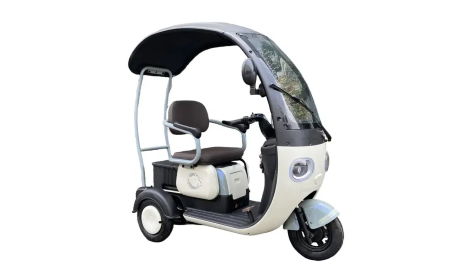
Another important advantage of electric tricycles is their environmental impact. Rural communities are often closely connected to their natural surroundings, relying on clean air, water, and soil for farming and daily life. Traditional fuel-powered vehicles contribute to air pollution and noise, which can disrupt these environments.
Electric tricycles produce zero emissions during use, making them much cleaner for the environment. They also operate quietly, reducing noise pollution in peaceful rural communities. This eco-friendly nature supports healthier living conditions and helps communities adopt more sustainable lifestyles.
On the social side, electric tricycles increase mobility for groups that are often overlooked. Women, elderly residents, and people with disabilities benefit from the stability and accessibility of three-wheeled vehicles, making it easier for them to participate in community life and contribute to local economies.
One of the main challenges in rural areas is poor infrastructure. Roads are often narrow, unpaved, or damaged, making it difficult for cars or trucks to travel smoothly. Electric tricycles, with their smaller size and strong suspension systems, are better suited to these conditions.
They can navigate narrow village paths, uneven dirt roads, and even steep slopes more effectively than larger vehicles. This makes them especially useful in areas where traditional vehicles cannot easily operate. As a result, rural communities gain greater access to transportation without having to wait for major infrastructure projects to improve roads.
While the affordability of electric tricycles is already an advantage, the real economic benefit comes from long-term cost savings. Unlike cars or motorcycles, they do not require expensive fuel. Maintenance is simple and cheaper, as electric motors have fewer moving parts. Batteries may eventually need replacement, but even with this cost, the overall expenses remain far lower than those of traditional vehicles.
For rural residents who often have limited and uncertain incomes, these savings can make a significant difference. Instead of spending large amounts on fuel, families and businesses can invest in education, healthcare, or farm improvements, leading to a better standard of living.
Despite their many benefits, electric tricycles in rural areas face certain challenges. Access to charging stations is limited in many regions, which can restrict the distance these vehicles can travel. However, innovative solutions are emerging, such as solar-powered charging stations or battery-swapping systems that allow quick replacement of depleted batteries.
Another challenge is durability in extremely rough terrain. Manufacturers are addressing this by designing stronger frames, larger wheels, and better suspension systems suited for rural conditions. Government policies and support programs can also play an important role by offering subsidies, building charging infrastructure, and promoting awareness about the benefits of electric vehicles in rural development.
As technology continues to improve, the role of electric tricycles in rural development is expected to grow. Advances in battery life, charging systems, and vehicle durability will make them even more practical for long-distance travel and heavier loads.
Governments, non-profit organizations, and private companies are also likely to invest more in expanding rural electric mobility. With the growing global focus on sustainable development, electric tricycles are positioned to become a key part of rural transport systems worldwide.
They are not just vehicles but tools for empowerment, connecting communities to markets, services, and opportunities that were once out of reach.
Electric tricycles are proving to be a transformative force in rural areas. By offering affordable, efficient, and environmentally friendly transportation, they are expanding accessibility for families, farmers, and businesses. They make it easier for children to reach schools, patients to access healthcare, and farmers to deliver their crops to markets. At the same time, they support local businesses, reduce costs, and improve the quality of life for entire communities.
While challenges such as charging infrastructure and road conditions remain, ongoing innovations and government support are helping to overcome these barriers. The future of rural transportation is likely to include electric tricycles as a central component, offering a balance of economic efficiency and sustainable development.
For rural communities seeking better connections and improved opportunities, electric tricycles are more than just vehicles—they are pathways to growth, inclusivity, and long-term progress.


